基于BLIP的图像自动描述生成
前言
C过送过没怂过
镇楼是西安队长,这两个BO5的发挥真的没话说,去年BO5战胜TES也是。WE找到了自己赢游戏的方法了啊。我也想能这样在自己的人生上硬气啊(
最近很火的是OBS+YOLO的三角洲吸附挂事件,不过yolo之前写过了,我还有黑客松等东西更新,不急,都要纳入的。
准备
模型
Salesforce 开源的 BLIP 模型,它能根据图像内容自动生成自然语言描述
环境准备
双系统+python:WSL2 Ubuntu + Python 3.11
需要安装的库
1 | pip install transformers sentencepiece sacremoses torch torchvision matplotlib |
transformers:提供 BLIP 模型和翻译模型sentencepiece&sacremoses:翻译模型所需的 tokenizer 依赖
训练脚本
技术上我们并不需要先写识别一个的以及批量训练的脚本,但是单张可以先看调试效率,以及根据单张出可视化结果,批量脚本专注于文字输出(results.txt),避免为每张图都弹窗或保存图片,节省时间。
且如果要对某张特殊图片调整 max_new_tokens、加入条件提示词(prompt)等,单张脚本改起来更直接,不影响批量处理。
单张
1 | from transformers import BlipProcessor, BlipForConditionalGeneration, MarianMTModel, MarianTokenizer |
保存为caption.py;
批量处理
1 | from transformers import BlipProcessor, BlipForConditionalGeneration, MarianMTModel, MarianTokenizer |
保存为batch_caption.py;
照片储存在下一级images/运行即可。
结果
如表
| 图片场景 | 英文描述 | 中文翻译 |
|---|---|---|
| 街景 | a busy street with cars and people walking on the sidewalk | 一条繁忙的街道,有汽车和行人在人行道上行走 |
| 公园 | a park with green trees and a person sitting on a bench | 一个有绿树的公园,一个人坐在长椅上 |
| 室内 | a living room with a couch and a television on the wall | 一个客厅,墙上有沙发和电视 |
| 动物 | a dog running on the grass in a garden | 一只狗在花园的草地上奔跑 |
| 食物 | a plate of food with rice and vegetables on a table | 桌上放着一盘有米饭和蔬菜的食物 |
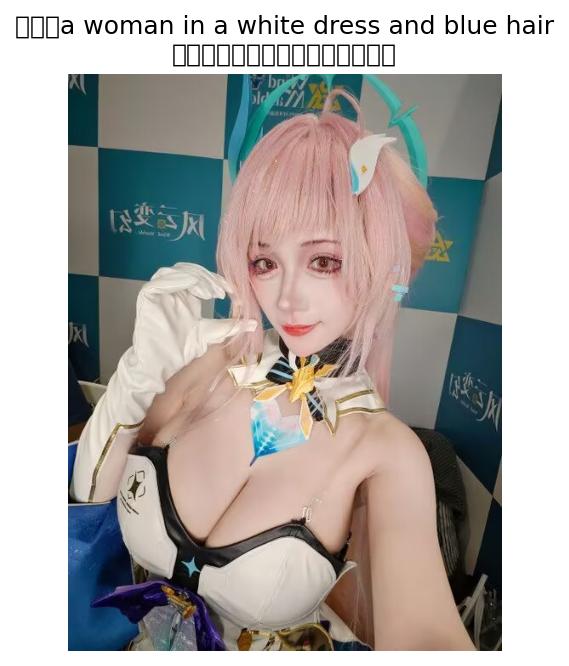
图片的”[]”是老问题了,后面处理一下。
可以看出,BLIP 对常见场景的描述相当准确,甚至能识别出物体间的空间关系(“沙发和电视在墙上”)。翻译模型整体流畅,偶尔长句语序会有点怪,但作为免费开源的模型已经非常良心了。
优缺点
无需训练,支持中英文,能理解复杂场景;缺点则是吃GPU,CPU速度明显比5070慢,倾向于描述主体而失去细节。
现实应用
BLIP 的架构(ViT + 语言解码器)是目前主流多模态大模型(如 GPT-4V、LLaVA、Gemini)的基础范式。也可以和yolo结合先识别再描述。
本博客所有文章除特别声明外,均采用 CC BY-NC-SA 4.0 许可协议。转载请注明来源 dxfaker's site!
相关推荐
2026-02-28
新开档:逆向
引言借不到的爱恋镇楼(我一直在哭) 我对这个模块最初的认知就是以前在某些神秘小游戏改数据的时候用的CE(cheat engine)有印象,但是后面发现其实可以对IoT有所辅助,遂决定开始先往reverse方向学习。但是当我接触reverse的题目的时候,我就发现了一个很大的问题:我的C和py很差,因为大一上学期主要在纯学高数a,且刚放假学的是c++,一进来用ghidra反编译出的代码要么是C要么是python的时候就很绝望,很多逻辑运算都看不懂,自己点开vs code也不知道该敲什么,满脑子的都是include<iostream>…于是,这篇文章便孕育而生,专门为的服务我这条蛆在忘记某些方面的知识的时候来复习的。这个模块也是随缘更新的,每学到一些东西便会记录,积累到一定程度便会端上来 Cstrcmp strcmp 是 C 语言标准库中的一个字符串比较函数,定义在 <string.h> 头文件中。比较两个字符串(以 \0 结尾的字符数组)是否相等,或者按照字典序(ASCII 码顺序)判断大小。比较过程是逐字符进行的,直到遇到第一个不同的字符或遇到字符串结束符...

2026-03-02
词条本1
写在前面老婆镇楼 这个就相当于是词条了,我后面复习直接 ctrl+f 用。 ylg基础知识这个就不是写给我看的了(bushi) 内联循环在编程中,“内联”(inline)指的是将函数体的代码直接插入到调用它的地方,而不是通过常规的 call 指令跳转过去。将函数体的循环直接插入,循环次数由运行时决定。这样做的好处是: ·省去了函数调用和返回时的栈操作(压栈、跳转、恢复等),提高执行速度。 ·对于小函数尤其有利,比如 strlen、memcpy 等。 12345678size_t strlen(const char *s) { size_t len = 0; while (*s != '\0') { len++; s++; } return len;} 如果编译器决定内联这个函数,那么在调用 strlen(str) 的地方,它不会生成 call strlen,而是直接生成一段循环指令来扫描字符串。 使用IDA反汇编时,可能会遇到的两种情况: ·直接调用 strlen:反编...

2026-04-20
YOLOv11 行人与车辆检测模型训练全记录
zhen YOLOv11 行人与车辆检测模型训练全记录摘要:目标检测是计算机视觉的核心任务之一,在自动驾驶、智能交通等领域具有重要应用。本文以YOLOv11为基础模型,详细记录了从环境配置、数据集构建、模型训练到视频部署的完整流程。实验结果表明,在515张交通场景图片(含412张训练、103张验证)上训练80轮后,模型整体mAP50达到0.905,其中汽车检测mAP50为0.939,行人检测mAP50为0.871,推理速度达145 FPS。本文重点分析了数据规模对模型性能的决定性作用,并总结了训练过程中遇到的典型问题及解决方案。 关键词:YOLOv11;目标检测;行人检测;车辆检测;数据扩充;WSL2 1. 引言近年来,基于深度学习的目标检测算法发展迅速,YOLO系列凭借其端到端、实时性高的特点成为工业界和学术界的常用工具。YOLOv11在YOLOv8的基础上引入了C3K2模块、C2PSA注意力机制和SPPF多尺度融合,进一步提升了检测精度与速度。 本文旨在通过一次完整的行人与车辆检测模型训练实践,探讨小规模数据集下模型性能的瓶颈,以及数据扩充带来的显著提升。本文记录的所有实验均...

2026-02-24
第一篇文章
ai指导静态网页开发起因第一篇就拿很熟悉的一张当封面吧由于要开始准备数学考试了,几天前回的学校。从图书馆回来的时候还早,学是不可能学的。便去问群友有啥游戏玩,结果是啥都没有。(我操你的)然后看到坨子在搜寻流萤背景当网站壁纸,了解一番便决定自己也整一个网页来玩一玩。 过程从21号晚上开始来着,从知乎找了篇佬的文章搭到github,用hexo和git开始搭倒是一路畅通无阻,几个小时就出来了初版但是,我不是很满意那个主题,然后去看了看群友的,基本上都是打包过来的,于是决定去借鉴一下mizuki的,不过他用的是Astro,不过不重要,我直接把这些问题丢给ai大人了,从github上把他的整个code下载到本地,然后用git调试。 1pnpm dev //本地启动开发服务器 本来vscode也有一个插件可以实现的,点右下角go to live即可(live server),不过好像astro一般用git的。 下一步就是把文件里的内容改成自己的信息,这个过程花了半天,我把每一个模块都看一遍,然后把自己的想法丢给ai,ai给代码,然后修改文件,刷新页面看效果。 我在写这篇文章的时候,还有友链没...